Bus Branding for E-Commerce Brands
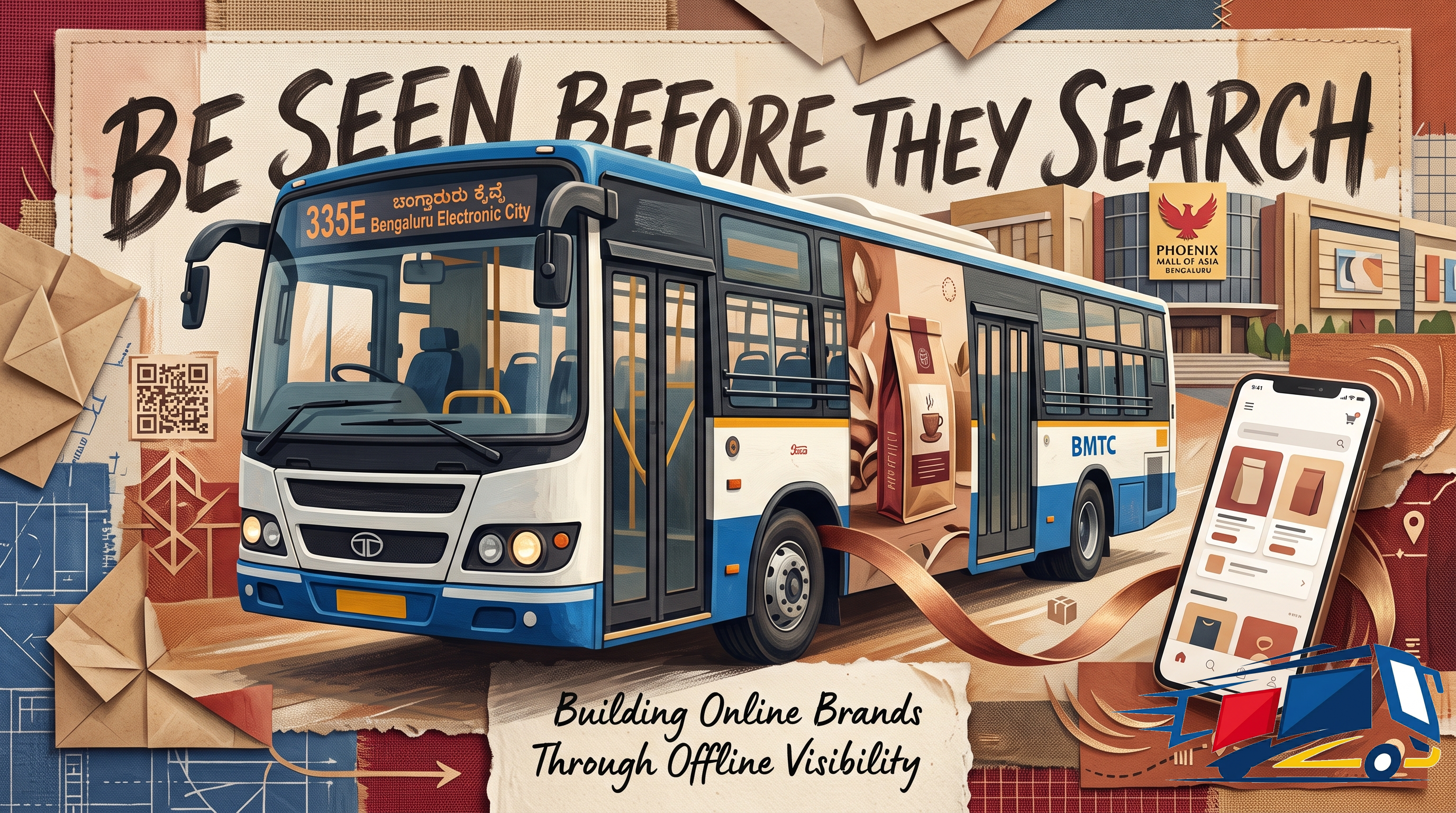
An e-commerce brand lives entirely in the feed, and so does every competitor, which is why feed advertising keeps getting more expensive and easier to scroll past. A bus is the opposite of a feed: it cannot be skipped, blocked or scrolled, and it puts your brand in the physical world the whole city shares. For online retail, that real-world break is how you build the recall that paid ads alone struggle to buy. Here is how transit works for a brand with no shop.
Key takeaways
- Break out of the feed: e-commerce competes in a crowded, costly feed; a bus is the unskippable real-world presence that cuts through it.
- Build the recall: in a repeat-purchase category, the goal is to be the brand and app a shopper thinks of first, not just the cheapest click.
- Own the sale event: the big sale is the year's demand spike, so pre-heat before it and dominate during it.
- Bridge offline to order: a QR takes a viewer straight to the app or site, turning a sighting into a tracked visit.
- Reach the shopper city-wide: your customers are everywhere online, so route broadly, with weight to dense urban and tech corridors.
Breaking out of a crowded feed
Online retail competes for the same screens, the same feeds, the same few seconds of attention, and the cost of that attention keeps climbing as more brands bid for it. A bus changes the surface entirely. It reaches people away from their phones, in the physical world, where there is no rival ad one swipe away and nothing to scroll past.
For a brand whose every other channel is in-feed and rising in cost, that physical, unskippable presence is rare and valuable. It builds brand memory at a scale and in a context the feed cannot, and a stronger brand makes the paid clicks you are already buying convert better.
Source: e-commerce and D2C acquisition runs largely on paid social and search, where customer acquisition costs have risen sharply; brands increasingly need brand-building beyond the feed to sustain growth, 2026.
Being the brand they open first
E-commerce is a repeat-purchase game. The brand that wins is the one a shopper thinks of first and whose app they open by default, not necessarily the one that served the cheapest ad. That kind of top-of-mind recall is built by being seen widely and repeatedly, which is exactly what a bus across the city does.
A shopper opening an app to buy chooses from the handful of names they trust and remember. Performance ads can win a single sale; brand presence wins the habit. A bus is a brand-building medium that quietly makes you one of those default names, so future purchases come to you without paying for each click.
Source: D2C growth depends on retention and lifetime value, not just acquisition; brand recall and trust drive the repeat purchases that make unit economics work, 2026.
Paid ads rent attention by the click and the rent keeps rising. A bus builds something you own: a brand the city recognises. One wins the next sale, the other wins the next year of sales.
Want your brand on Bengaluru's buses?
Get a route plan, format recommendation and pricing, usually within a minute.
Owning the sale event
E-commerce has a rhythm no other category has quite like it: the big sale. Festive mega-sales and seasonal events are when price-conscious shoppers wait, plan and spend, so a huge share of the year's business compresses into a few windows. A bus campaign built around that calendar pre-heats the anticipation and dominates the moment.
- Pre-heat, the weeks before the sale. Buses build awareness of the dates and the deal, so the city is primed before the sale opens.
- Peak, the sale window. Full presence on the road as everyone is shouting, so your brand is the one shoppers remember and open.
- Sustain, between events. A lighter, steady presence keeps the brand familiar so the next sale starts from a warmer base.
Source: Indian online shoppers are highly price-conscious and concentrate purchases around mega-sale events like festive season sales; over a third prefer to shop during sales, making these windows decisive, 2026.
The offline-to-order bridge
An e-commerce brand's store fits in a pocket, so the distance from seeing a bus to landing in your app is one scan. A QR code turns the physical sighting into a measurable digital visit, and ties an offline medium to the online metrics your team already lives by.
Source: QR codes on OOH offer a low-friction path to app installs and visits with clear value cues and deep links; UTM tagging ties offline exposure to online sessions and conversions, 2026.
An example sale-season campaign
Here is the approach made concrete for an online brand building toward a big sale. The structure is the takeaway, the routes, offer and dates would be set to your brand and calendar.
| Layer | What runs | Job |
|---|---|---|
| Full wraps | Brand + sale dates, citywide | Unskippable awareness and recall |
| Back panels | QR / scan for the deal to app | Bridge to a tracked visit |
| Dense urban / tech routes | Where online shoppers concentrate | Reach the active e-commerce audience |
| Pre-heat to peak weighting | Build before, dominate during | Own the demand spike |
- Lead with brand, then the deal. Make the name memorable, then attach the sale and the dates.
- Pre-heat the city. Build awareness in the weeks before, so anticipation is high at launch.
- Bridge with a QR. A deep link to the app or sale page, UTM-tagged, for a clear value.
- Read the lift. Track scans, app sessions and how paid converts during the run.
We will take your brand off the screen and onto the street
Tell us your brand, your sale calendar and the shoppers you want, and we will plan the route set that puts you unskippably across the city, the dense urban and tech corridors where online shoppers live, wrapped with your brand and a scan for the deal QR that deep-links into your app or site. We weight the buses to pre-heat your big sale and dominate the window, brand them across the campaign, and send daily GPS-tagged install photos. You watch the brand-search, app sessions and how your paid spend converts. We handle the buses.
Plan your campaign under bus branding in Bengaluru, or see the wider approach in transit advertising.
Frequently Asked Questions
Why would an online-only brand use bus branding?+
Because every online channel sits in a crowded, rising-cost feed. A bus is unskippable and unblockable, reaching people in the physical world and building brand recall that makes your paid clicks convert better and your app the one shoppers remember.
How does a bus help if I sell only through an app or site?+
It builds recall and trust off-screen, then bridges back with a QR that deep-links straight into your app or store. The destination fits in a pocket, so the gap from seeing the bus to shopping is a single scan.
When should an e-commerce campaign run?+
Around the big sale events, festive mega-sales and seasonal windows, when price-conscious shoppers concentrate their spending. Pre-heat in the weeks before so you enter the sale already top of mind, then dominate the window.
Which routes should an online brand pick?+
Route broadly, since online shoppers are everywhere, with weight to dense urban and tech corridors where the active, app-using audience concentrates. Match the spread to where your customers and your delivery footprint are strongest.
How is this different from running more digital ads?+
Digital ads rent attention by the click at rising cost; a bus builds a brand the city recognises. One wins the next sale, the other wins the habit, and the brand recall makes every paid channel work harder.
How do I measure a bus campaign for e-commerce?+
By QR scans, app sessions and brand-search lift, plus how your paid channels convert during the run. A UTM-tagged deep link ties the offline sighting to online sessions and orders.
Bus Branding Glossary
- Full bus branding (wrap)
- A full vehicle wrap covering both sides and the rear of the bus, the highest-impact, most visible format.
- Bus back / rear branding
- Advertising on the rear panel of the bus, in the line of sight of traffic queued behind it at signals and junctions.
- Side panel branding
- Branding on one or both side panels of the bus body, facing pedestrians and parallel traffic along the route.
- Vajra / AC service
- BMTC's premium air-conditioned (Volvo / Vayu Vajra) services, carrying a higher-income commuter set on IT and airport corridors.
- TTMC
- Traffic and Transit Management Centre, a large BMTC bus terminal where many routes start, terminate and interchange.
- Depot
- The BMTC facility where buses are parked, serviced and from which many local routes originate.
- Dwell time
- How long a bus stays in view of a stationary crowd, at a stop, signal or in slow traffic, which lengthens brand exposure.
- Corridor
- A main arterial road (e.g. the Outer Ring Road or Hosur Road) that a bus route runs along, defining who sees the branding.
How to run a BMTC bus branding campaign
Five simple steps from enquiry to a live, tracked campaign on Bengaluru's buses.
- 1
Pick your area & audience
Tell us the Bengaluru area or corridor you want to reach and who you're targeting, IT professionals, shoppers, students or residents.
- 2
Choose a format
Select a format, full bus wrap, rear panel, side panel or premium AC/Vajra service, based on your budget and the impact you want.
- 3
Select routes & bus count
We map the high-frequency routes and stops that cover your audience and recommend how many buses to brand.
- 4
Approve the creative
Share your artwork (or we help design it). We prepare it to BMTC specifications and get the approvals.
- 5
Go live & get proof
We print, wrap and deploy the buses, then share proof of display so you can see your brand on the road.
Bus Branding Formats
Choose how your brand rides, pick the format that fits your goal and budget.
Bus Branding Across Bengaluru
We run BMTC bus branding in every major Bengaluru neighbourhood. Explore more areas:
Outdoor & Transit Advertising Specialists
We plan, design and run BMTC bus branding campaigns across every major Bengaluru corridor, matching brands to the routes, formats and audiences that deliver the most visibility.
Discover More
Bus Branding for Telecom Brands
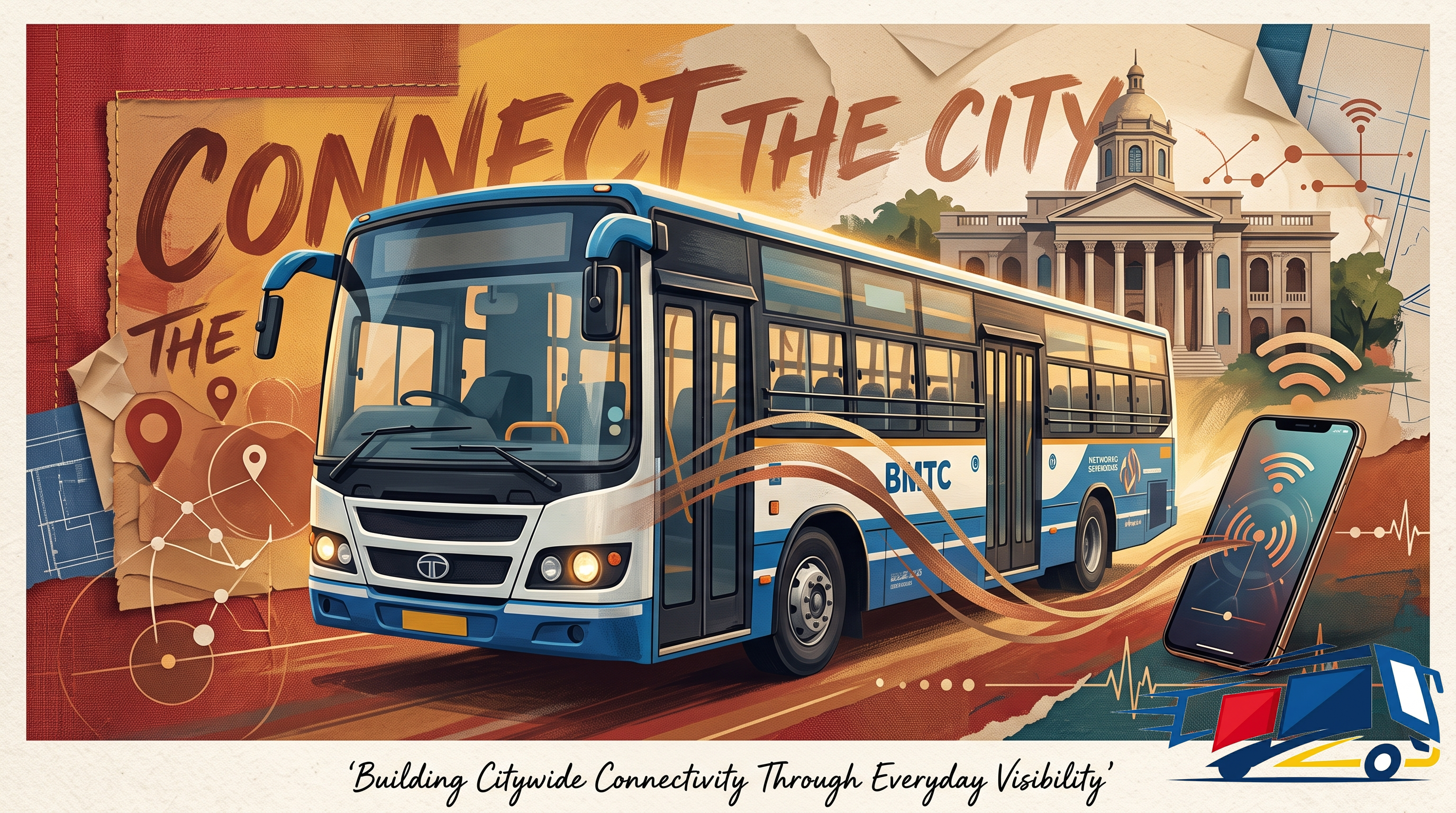
Why telecom and connectivity brands use bus branding: the mass reach a near-universal market needs, offer-led plan and 5G messaging, and the salience that wins the switch in a low-differentiation category.
Bus Branding for Automobile Dealerships
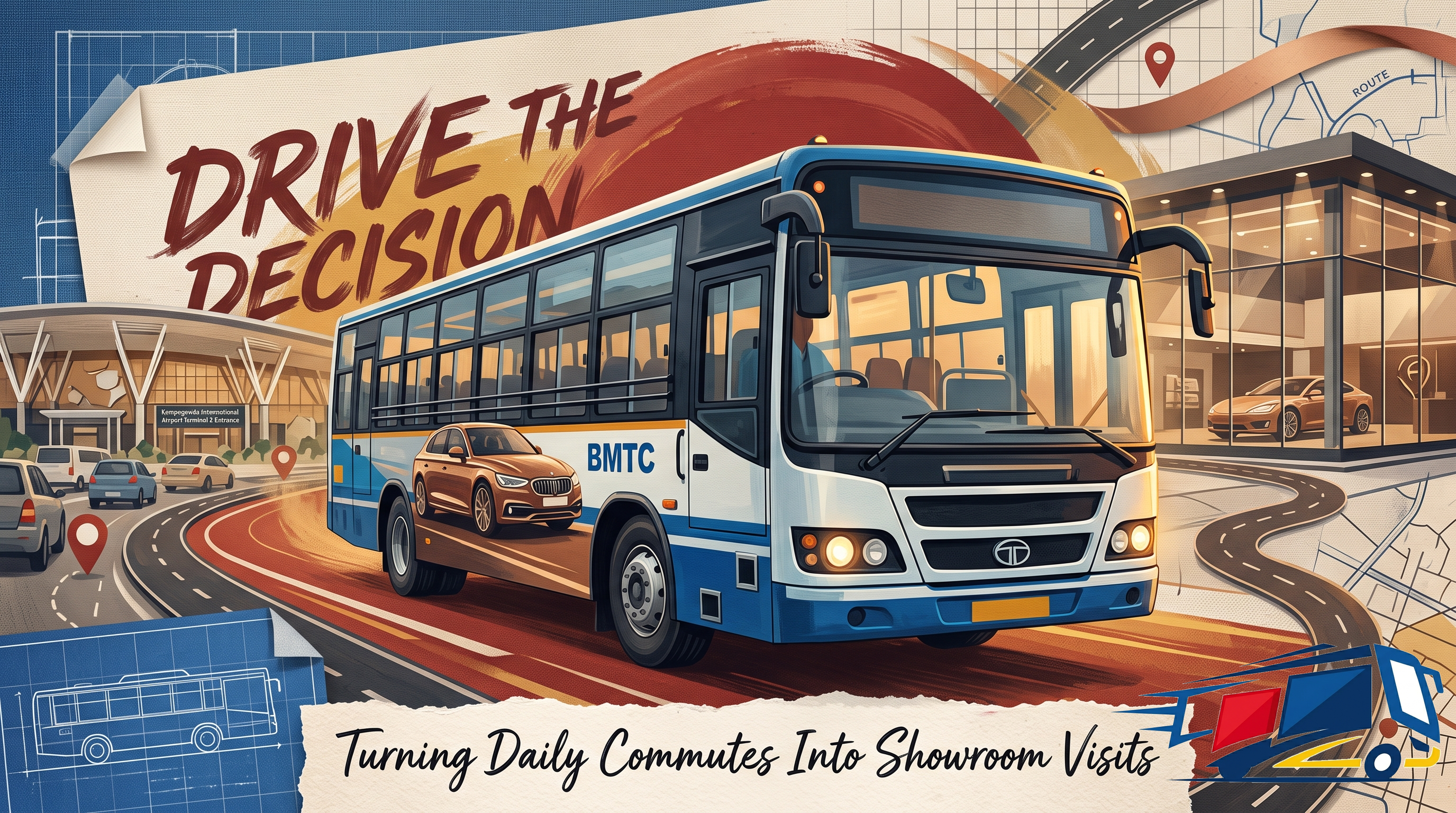
How bus branding drives showroom visits and test drives for car and bike dealers: reaching buyers on the road, winning the local visit, routing to the showroom, and timing to launches and festive buying.
Bus Branding for Public-Awareness & Government Campaigns
Why buses suit public-awareness, government, NGO and CSR campaigns: all-society reach including the offline majority, a credible civic message in the local language, and a simple, repeated call to action.