Using QR Codes & Landing Pages to Track Bus Campaigns
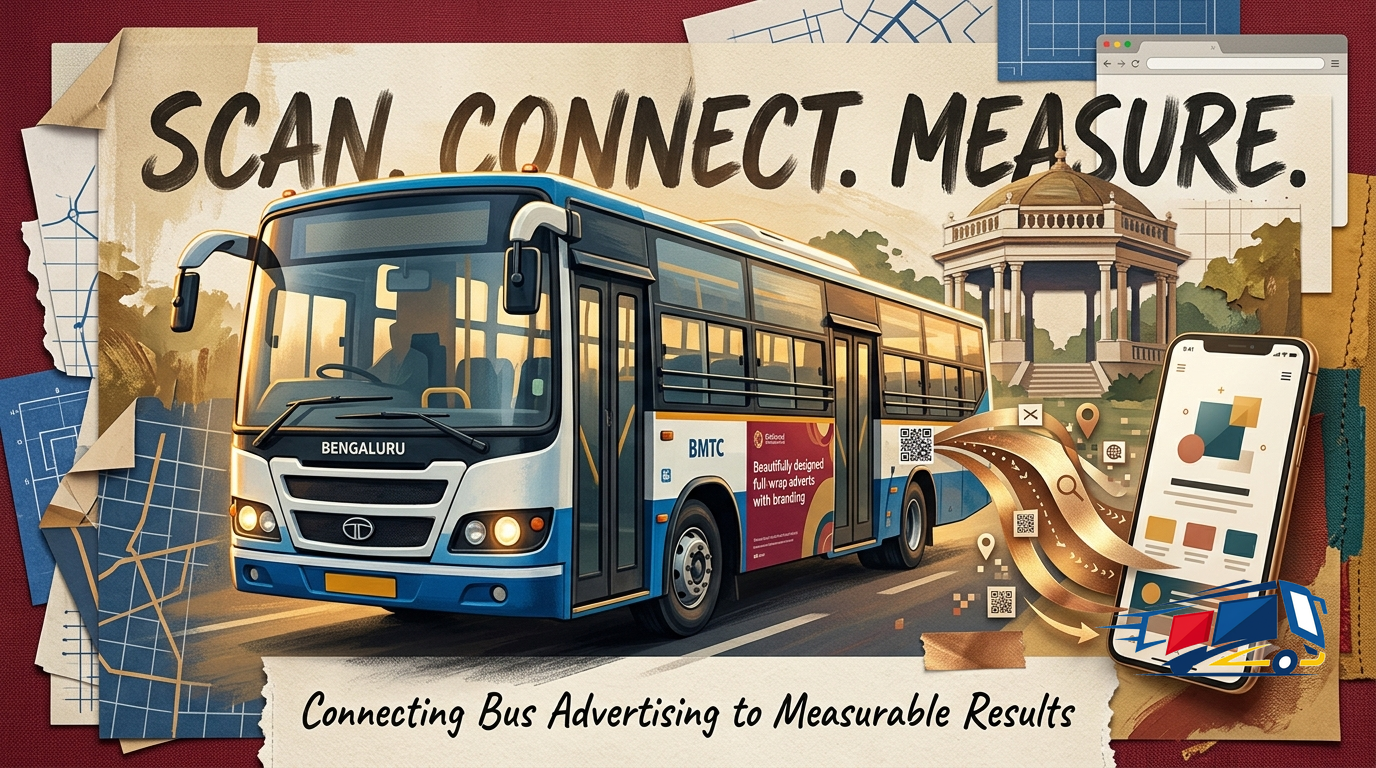
A bus campaign feels untrackable until you give it a door into the digital world. A QR code and a dedicated landing page are that door: scan, land, and the action is counted. Done right, they turn "we think it worked" into a number. Done lazily, they leak data. This is the practical setup, from the code on the panel to the report you read after.
Key takeaways
- Use a dynamic QR, not a static one, so you can edit the destination and see scan analytics in real time.
- Pair it with a clear value CTA, "scan to get X", never a naked code; an incentive lifts scans.
- Place it where a bus is scannable, a back panel at a signal or a shelter where people wait, not a wrap at speed.
- Send scans to a dedicated, fast landing page built for the campaign, tagged with UTM parameters.
- Read scans as a floor: total vs unique, then conversions, knowing most who act later never scan.
Get the QR code right
Two rules decide whether a QR earns its place. Make it dynamic, so the destination is editable and every scan is logged, and never show it naked, always with a clear reason to scan. A code that just says "scan me" is ignored; one that promises a reward gets used.
| Feature | Static | Dynamic |
|---|---|---|
| Edit destination | No, fixed forever | Yes, anytime |
| Scan analytics | None | Total, unique, time, device |
| Fix a broken link | Reprint everything | Change in dashboard |
| Best for | Never-changing info | Every campaign |
Place it where a bus can actually be scanned
This is the bit most guides miss. A QR only works if someone has the seconds and the stillness to scan it. On a moving bus that is rare, so placement decides everything. Favour the moments the bus or the viewer is paused.
| Placement | Scannable? | Why |
|---|---|---|
| Back panel at a signal | Best | Traffic behind is stopped, holding phones |
| [object Object] | Excellent | People wait 5 to 15 minutes |
| Interior card | Good | Seated riders, dwell time |
| Side wrap at speed | Poor | No time to scan a moving bus |
So if a campaign needs scans, build them into a back panel or shelter, not a full wrap. A wrap is for awareness; a back panel at a junction is where the QR earns its keep. Match the tool to the moment, and test the code at real print size and lighting before it goes out.
Want your brand on Bengaluru's buses?
Get a route plan, format recommendation and pricing, usually within a minute.
The landing page, built for the campaign
Where the scan lands matters as much as the scan. Send people to a dedicated, mobile-fast page that delivers exactly what the code promised, never your generic homepage. A scan that lands on a slow or irrelevant page is a wasted scan.
A dedicated page does double duty: it converts better because it matches the promise, and it measures cleanly because every visitor arrived from the bus. Put the offer or action front and centre, keep it light, and make the next step obvious. If the code said "10% off", the page opens with the 10% off, not a menu.
Source: scans should land on a dedicated, mobile-optimised page that loads in under three seconds and matches the ad's promise; a generic homepage rarely converts, 2026.
Tag the link with UTMs
A landing page alone tells you visits happened; UTM tags tell you they came from the bus. These small additions to the URL flow into your analytics so bus-driven traffic shows up named and separated, not lost in "direct".
| Tag | Names | Example |
|---|---|---|
| utm_source | Where it came from | bus |
| utm_medium | The channel type | ooh-transit |
| utm_campaign | Which campaign | launch-koramangala |
Reading the data honestly
The numbers are only useful if you read them right. Start with scans, split total from unique, then follow through to what people did on the page. And keep one truth in mind: scans are a floor, not the full impact of the campaign.
| Metric | What it tells you |
|---|---|
| Total scans | All scanning activity, repeats included |
| Unique scans | Distinct people, the real reach |
| Conversion rate | Scans that completed the action |
| Bounce rate | Scanned then left, a page problem |
Treat scans as the smallest, most certain proof, not the whole story. The bus that earned 300 scans was also seen by tens of thousands who never reached for their phone but remembered the name.
We will wire the tracking in for you
Want your bus campaign to show up in your analytics? We will set it up end to end: a dynamic QR with a clear CTA, placed where it can actually be scanned, pointing to a fast campaign landing page with the right UTM tags, and separate codes per placement so you can see what worked. You read clean numbers in your own dashboard, and we will be honest that scans are the floor, not the ceiling, of what the buses did.
Set up trackable bus branding under bus branding in Bengaluru, or see the wider approach in transit advertising.
Frequently Asked Questions
How do I track a bus advertising campaign?+
Give it a QR code and a dedicated landing page. The QR (dynamic, so it logs scans) sends people to a campaign page tagged with UTM parameters, so visits and conversions attribute back to the bus in your analytics.
Should I use a static or dynamic QR code?+
Dynamic, always. It lets you edit the destination after printing, fix a broken link without reprinting, and see scan analytics, total, unique, time and device. Static codes offer none of that.
Where should the QR code go on a bus?+
Where it can be scanned: a back panel at a signal (stopped traffic behind), a bus shelter (people wait), or an interior card (seated riders). A side wrap seen at speed gives no time to scan.
Where should the QR code link to?+
A dedicated, mobile-fast landing page built for the campaign that delivers exactly what the CTA promised, loading in under three seconds. Never your generic homepage, which rarely converts a scan.
What are UTM tags and why do I need them?+
Small additions to the URL (source, medium, campaign) that tell your analytics where a visit came from. Without them, bus-driven traffic hides in untracked "direct" and you cannot prove the campaign worked.
Why are my scan numbers lower than my impressions?+
Because most people who see a bus never scan, they act later or just remember the brand. Scans are a floor, the minimum proven response, so read them alongside branded search and footfall, not on their own.
Bus Branding Glossary
- Full bus branding (wrap)
- A full vehicle wrap covering both sides and the rear of the bus, the highest-impact, most visible format.
- Bus back / rear branding
- Advertising on the rear panel of the bus, in the line of sight of traffic queued behind it at signals and junctions.
- Side panel branding
- Branding on one or both side panels of the bus body, facing pedestrians and parallel traffic along the route.
- Vajra / AC service
- BMTC's premium air-conditioned (Volvo / Vayu Vajra) services, carrying a higher-income commuter set on IT and airport corridors.
- TTMC
- Traffic and Transit Management Centre, a large BMTC bus terminal where many routes start, terminate and interchange.
- Depot
- The BMTC facility where buses are parked, serviced and from which many local routes originate.
- Dwell time
- How long a bus stays in view of a stationary crowd, at a stop, signal or in slow traffic, which lengthens brand exposure.
- Corridor
- A main arterial road (e.g. the Outer Ring Road or Hosur Road) that a bus route runs along, defining who sees the branding.
How to run a BMTC bus branding campaign
Five simple steps from enquiry to a live, tracked campaign on Bengaluru's buses.
- 1
Pick your area & audience
Tell us the Bengaluru area or corridor you want to reach and who you're targeting, IT professionals, shoppers, students or residents.
- 2
Choose a format
Select a format, full bus wrap, rear panel, side panel or premium AC/Vajra service, based on your budget and the impact you want.
- 3
Select routes & bus count
We map the high-frequency routes and stops that cover your audience and recommend how many buses to brand.
- 4
Approve the creative
Share your artwork (or we help design it). We prepare it to BMTC specifications and get the approvals.
- 5
Go live & get proof
We print, wrap and deploy the buses, then share proof of display so you can see your brand on the road.
Bus Branding Formats
Choose how your brand rides, pick the format that fits your goal and budget.
Bus Branding Across Bengaluru
We run BMTC bus branding in every major Bengaluru neighbourhood. Explore more areas:
Outdoor & Transit Advertising Specialists
We plan, design and run BMTC bus branding campaigns across every major Bengaluru corridor, matching brands to the routes, formats and audiences that deliver the most visibility.
Discover More
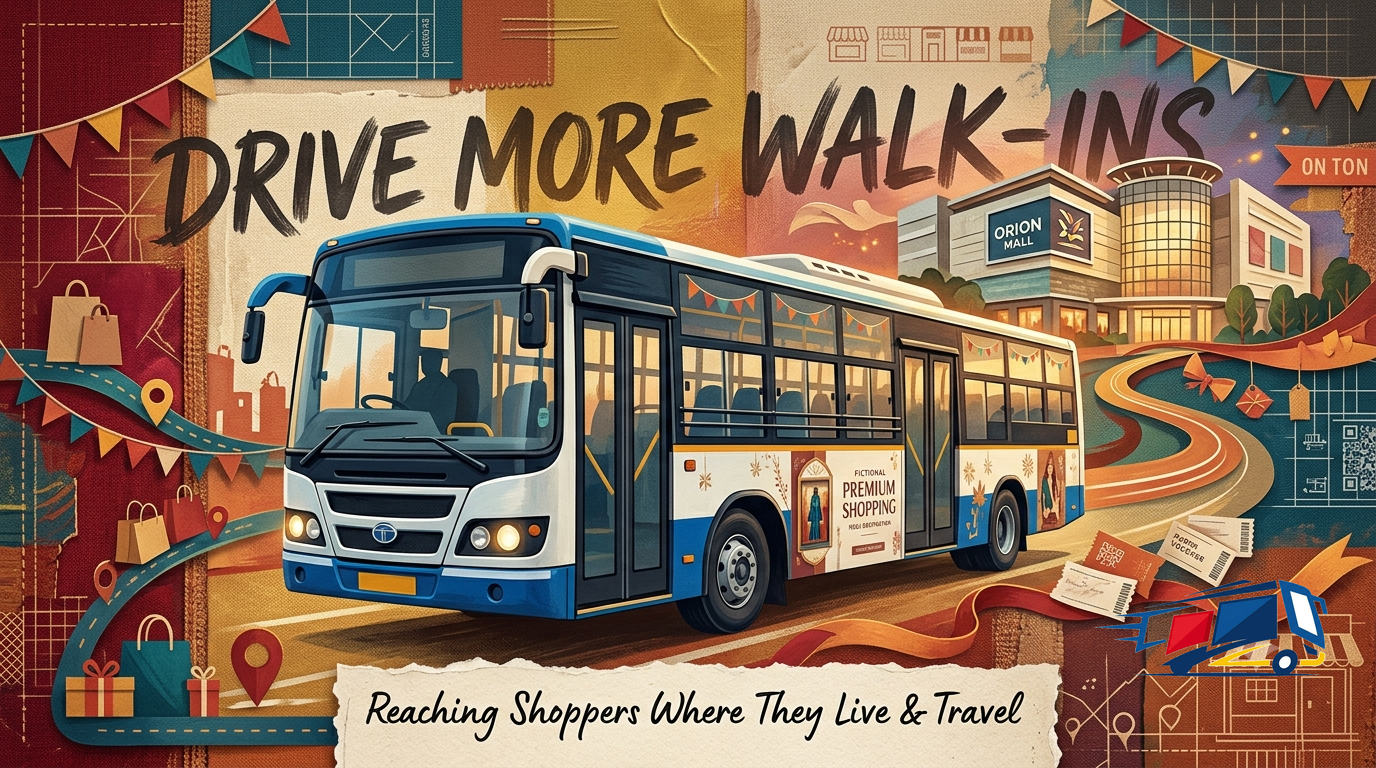
Bus Branding for Retail & Shopping Malls
How bus branding drives footfall to a store or mall: routing the buses that feed shoppers in, running offer-led creative, timing to weekends and the festive surge, and tracking walk-ins.
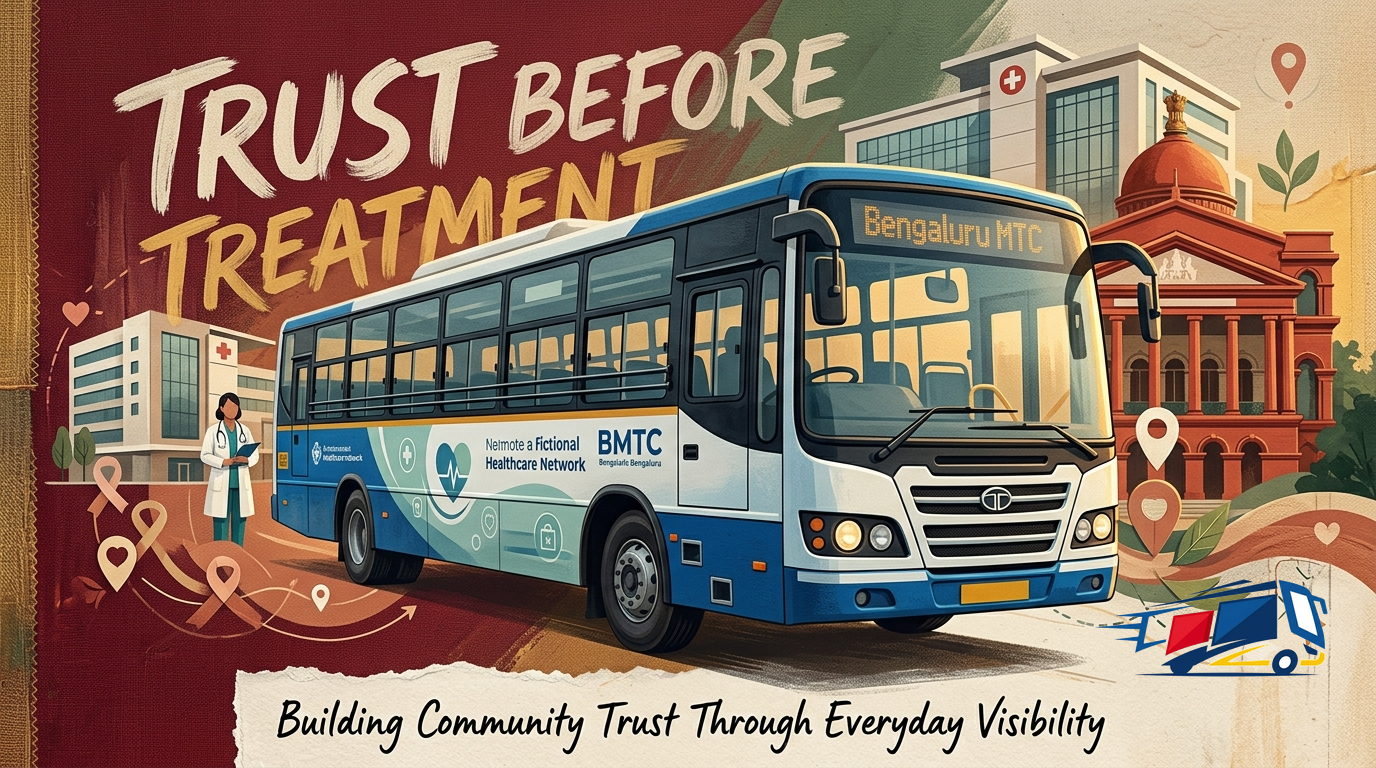
Bus Branding for Hospitals & Healthcare Brands
How bus branding works for hospitals, clinics and diagnostic brands: building local trust across the catchment, what to advertise, timing, and keeping the creative compliant under India's healthcare advertising rules.
Bus Branding for Ed-Tech & Coaching Institutes
How bus branding works for coaching institutes and ed-tech: reaching both students and the parents who decide, timing to the admission cycle, choosing education routes, and driving demo bookings.